1. Blackout Greenhouse
2. Rectangular Greenhouse
Mul-Span Greenhouse
Tunnel Greenhouse
Rain Shelter Greenhouse
Venlo Greenhouse
Passive In-Solar Greenhouse
Venlo Greenhouse
Poultry Greenhouse
Mushroom Greenhouse
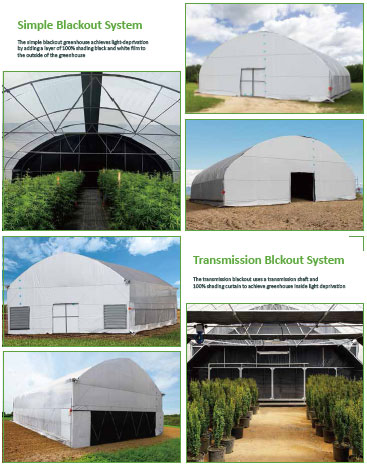
1. Blackout Greenhouse
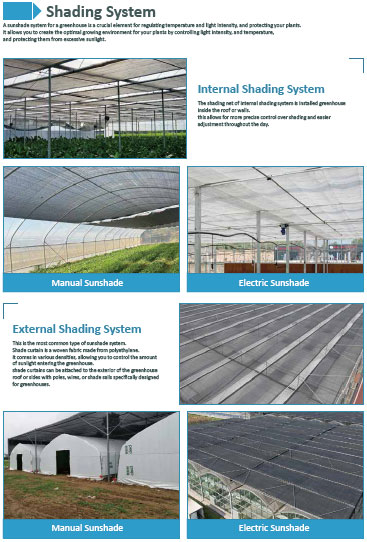
A blackout greenhouse, also known as a light-depriva on greenhouse, is a specialized greenhouse structure designed to control the amount of light that plants receive. this is achieved by using blackout curtains or specially designed coverings that can be deployed to block out natural light. blackout greenhouses are most commonly used for growing crops that benefit from periods of darkness, such as: cannabis, certain herbs and flowers, mushrooms. some of the benefits of using a blackout greenhouse:increased crop yields, Improved crop quality, reduced pest and disease problems.
2. Rectangular Greenhouse
Rectangular greenhouses have a simple structure and low cost. they usually use shade nets or insect-proof nets as covering materials,
which have better shading and ventilation effects. although they cannot prevent rain from entering, they can also reduce the damage of rain to crops.
3. Multi-Span Greenhouse
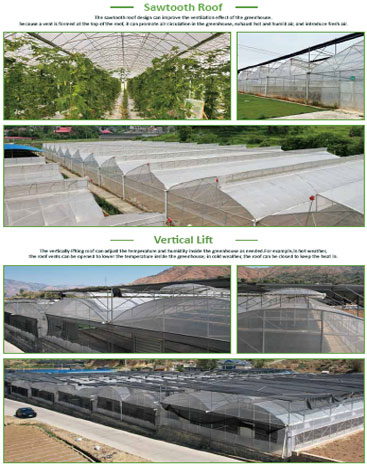
A multi-span greenhouse is a type of greenhouse that consists of several connected sections or bays. these bays are typically arranged in a long row, creating a spacious and efficient growing environment. each multi-span greenhouse is composed of numerous individual bays, often ranging from 4 to 10 meters wide and of customizable lengths. straight sidewalls provide ample space for plant cultivation and allow for efficient use of the interior area. there are three roof designs can be chosen. multi-span greenhouses can be equipped with various climate control systems, ventilation options, and automation features to create optimal growing conditions for a wide range of crops. while the initial investment might seem higher, the increased growing area and efficient use of space can lead to better cost-effectiveness compared to multiple smaller greenhouses.
4. Tunnel Greenhouse
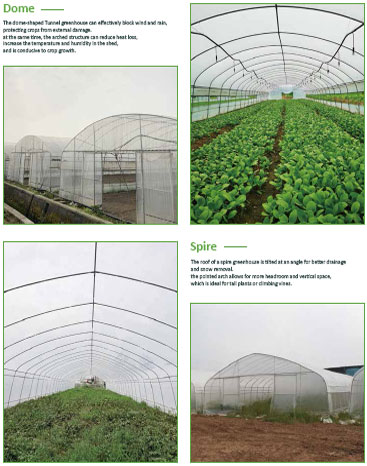
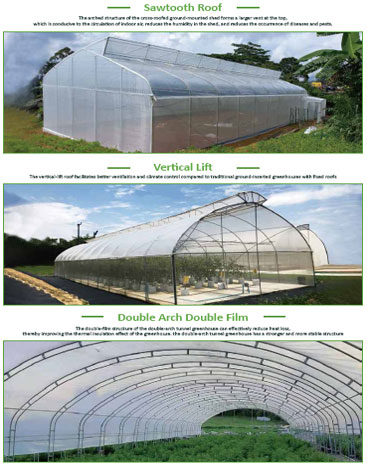
The most notable feature of a tunnel greenhouse is its arched roof structure made of vaulted arches. these arches are made of galvanized steel and covered with durable plasticc film to create a controlled growing environment tunnel greenhouses can have simple end walls made of the same plasticc film material as the roof, or they can have more permanent wall panels with doors or windows to allow ventilatioon and entry and exit.the simple design and readily available materials make tunnel greenhouses a relatively inexpensive option compared to more complex greenhouse structures.tunnel greenhouses are often sold as prefabricated kits with easy-to-follow assembly instructioons for do-it-yourself construction.it can be easily ventilated by rolling up the side film or opening vents installed in the end walls, allowing for air circulation and temperature control.
5. Rain Shelter Greenhouse
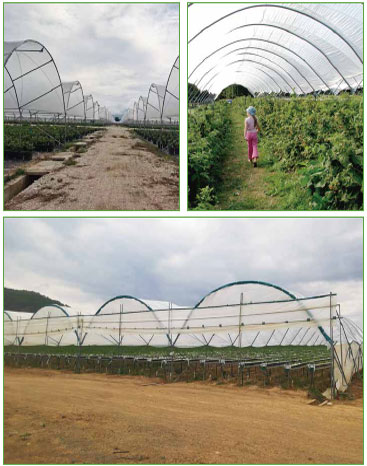
A rain shelter greenhouse is a specialized greenhouse structure that offers protection from rain and other harsh weather elements for your plants, while still allowing for light transmission and ventilation.unlike a traditional greenhouse with a fully enclosed structure, a rain shelter greenhouse typically has a roof that only covers a portion of the top, leaving the sides open for ventilation.
the primary benefit of a rain shelter greenhouse is protection from excessive rainfall. this can be crucial in areas with heavy or unpredictable rainfall that could damage delicate plants. the open sides of the structure facilitate air circulation, preventing heat buildup and reducing the risk of fungal diseases.
6. Venlo Greenhouse
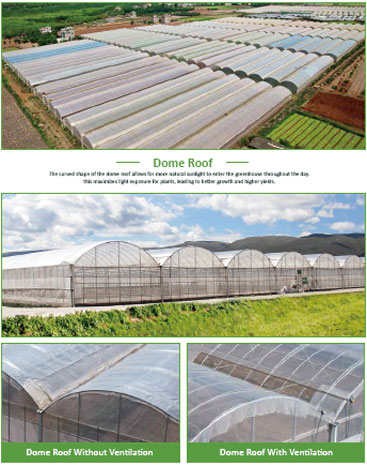
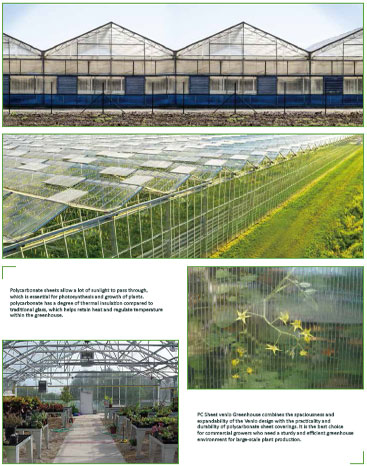
Composed of several connected bays with an arched roof, venlo greenhouses offer more space for growing plants than single-span greenhouses.
7. Drying Greenhouse
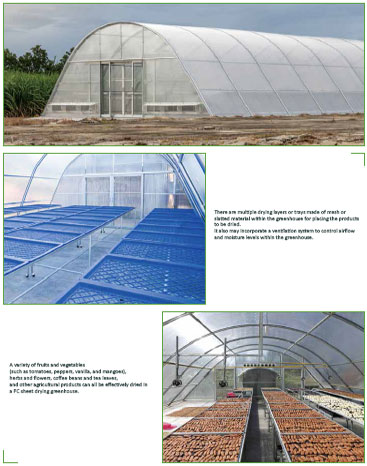
A solar dryer greenhouse is a unique structure that utlizes the greenhouse effect and sunlight to dehydrate or dry various agricultural products. the PC sheet drying greenhouse utlizes solar energy, a renewable and sustainable resource, for the drying process. this reduces reliance on fossil fuels compared to traditonal drying methods.
8. Passive In-Solar Greenhouse
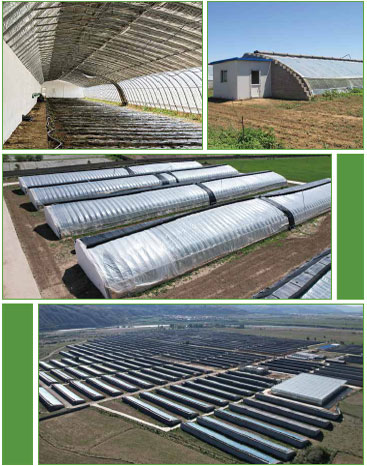
The Chinese-style solar greenhouse is also called warm greenhouse. the greenhouse is built with walls on three sides, and one side is covered with film and ther al insulation quilts. through the back wall, solar energy is absorbed and stored, and heat energy is released at night. the quilts are insulated to maintain a certain temperature level in the greenhouse. to meet the temperature required for crop growth greenhouse has a good thermal insulation effect, saves energy, and is very suitable for cold regions.
9. Poultry Greenhouse
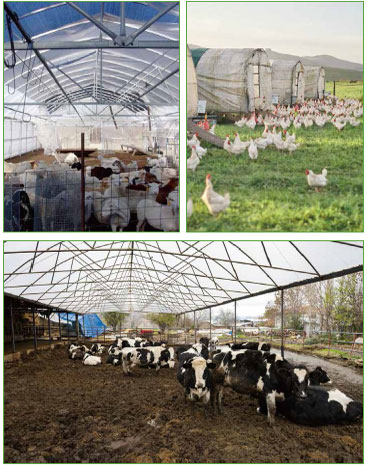
A greenhouse is designed as an area suitable for poultry growth. the ventilation system of the greenhouse helps maintain good air quality for birds and plants. poultry greenhouses protect animals from adverse weather conditions such as extreme heat, cold or excessive rainfall. exposure to predators and parasites is reduced compared to free-range chickens. egg production may be higher because the environment is more controlled and free from stress.
10. Mushroom Greenhouse
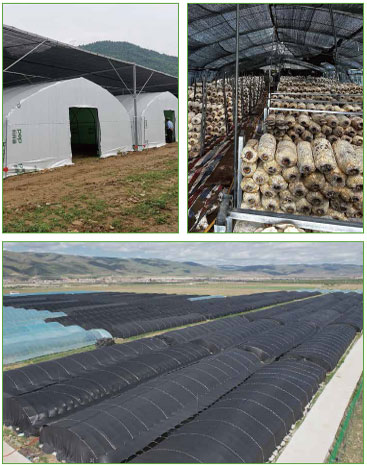
Mushrooms do not require sunlight to grow, in fact, some species can even be harmed by sunlight. mushroom greenhouses have very few windows and often use a black and white film or shade net to block out natural light. fresh air exchange is important to prevent mold growth and ensure proper
gas exchange for the mushrooms. by controlling the environment, mushroom production can be done year-round, regardless of the outside climate.